There is nothing more discussed in board meetings, company pitches and market analysis than artificial intelligence. However, every AI model, data centre and automation process relies on a physical foundation that receives far less attention. Energy keeps the servers running, minerals and electrical infrastructure deliver the power, and digital networks connect devices and systems.
At a time when significant capital is flowing into software development and AI applications, another group of investors is looking at the industries that make this technological transformation possible. They believe that the demand for energy, natural resources and connectivity represents a fundamental, long-term economic opportunity.
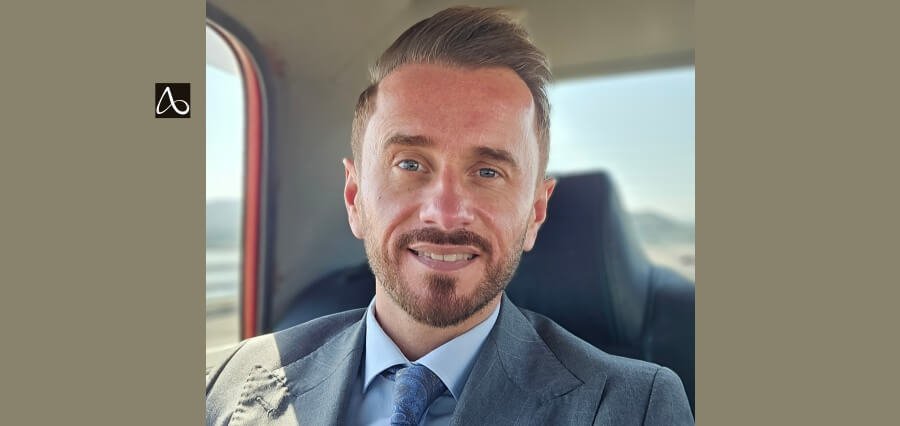
Marcin Lapa represents this approach. He is the Chief Executive Officer of Noor Al Nahda Investment LLC and Managing Partner of L’Martin & Partners, an international legal and strategic advisory practice. Based in Dubai, he leads an investment platform with a clear philosophy: Investing in what AI cannot live without.
The platform focuses on four interconnected sectors: Natural Resources, Energy Transition, Digital Infrastructure and Applied AI. Its international business activities and strategic relationships extend across more than 30 countries, connecting investment opportunities, industrial expertise and institutional partners across multiple continents.
A Career Built from Digital Transformation
Marcin Lapa’s professional journey followed an unconventional path. He did not begin as a lawyer, financial adviser or traditional investment banker. More than two decades ago, he began his career in digital transformation, working on technology and business transformation projects for major international companies operating in the energy and natural resources sectors.
His early professional experience placed him at the intersection of technology, industrial operations and global business. Working with large international organisations, he developed an understanding of how complex enterprises operate, how technology transforms traditional industries and how digital systems can improve efficiency, productivity and strategic decision-making.
Those experiences shaped a perspective that remains central to his investment philosophy today: technology and the physical economy are inseparable.
Over time, his professional responsibilities expanded beyond technology into international business development, corporate finance, investment structuring and mergers and acquisitions. International law followed, providing the legal foundation needed to structure, protect and finance increasingly complex cross-border transactions.
What began as a career in digital transformation gradually evolved into a multidisciplinary approach connecting technology, finance, legal expertise and strategic investment.
Today, through Noor Al Nahda Investment and L’Martin & Partners, he brings these disciplines together.
“I believe my greatest advantage is understanding transactions from multiple perspectives: as an entrepreneur, investor, business operator, strategic adviser and lawyer,” he says.
His career has, in many respects, come full circle. Having started by helping traditional industries adopt technology, he now focuses on the natural resources, energy systems and infrastructure required to support the next generation of technological transformation.
Lessons from the Family Office World
Marcin Lapa’s journey through the Middle East’s royal and family office environment reflects another important evolution in his professional career.
He initially worked in business development and management roles connected with Sheikh Al Maktoum, developing international commercial relationships and supporting strategic business initiatives.
Over time, his responsibilities expanded considerably, eventually progressing to chief executive and presidential leadership roles within business structures associated with Sheikh Al Qassimi.
This progression, from business development and operational management to executive leadership, provided him with an understanding of how major investment decisions are made within royal offices, family businesses and international private investment structures.
Working alongside royal offices, private investors and family businesses in the Middle East shaped his understanding of wealth, governance and long-term legacy.
He draws two important lessons from that experience.
First, wealth creation and wealth preservation demand different disciplines, and successful families understand the importance of both. Rather than focusing exclusively on short-term financial performance, they consider continuity, governance, succession and protecting their economic position across generations.
Second, trust outweighs access.
Relationships may open doors, but credibility, transparency and consistent execution determine whether those relationships develop into lasting partnerships.
Noor Al Nahda applies institutional governance principles to its investment activities, whether working with family offices, private investors or institutional partners.
The firm emphasises documented ownership, traceable capital flows, independent verification, regulatory compliance and auditable investment structures.
“Transparency is not simply a regulatory obligation for us. It is a fundamental business principle,” he states.
His ambition is to develop investment environments where investors understand precisely what they own, how capital is deployed, how investment decisions are made and how financial performance is reported.
He believes that transparency, investor security and accountability must form the foundation of any serious long-term investment relationship.
Where Capital Meets Real Assets
Marcin Lapa regards the creation of a UAE-based platform connecting his international experience as one of the defining milestones of his career.
Dubai, in his view, provides an exceptional environment for bringing together global capital, institutional relationships, government connections and investment opportunities across continents.
Today, Noor Al Nahda’s international activities and business network span more than 30 countries, with relationships across the Middle East, Africa, Europe and Asia.
This international presence supports the firm’s ability to identify opportunities, connect strategic partners and coordinate cross-border investment initiatives.
From its Dubai base, Noor Al Nahda concentrates on industries where its leadership and partners possess substantial practical experience.
In natural resources, the platform maintains investment and commercial relationships with Victoria Mines & Minerals and Greenvest Minerals. These businesses connect African resource opportunities with international investment, processing, trading and commercial infrastructure.
In energy and industrial infrastructure, Noor Al Nahda maintains an investment and commercial relationship with Evaco Cables, a business supporting electrical infrastructure, manufacturing and the modernisation of power systems in Southern Africa.
These relationships illustrate the firm’s investment philosophy.
He does not believe that investment decisions should be made exclusively through financial presentations or theoretical market projections. His team examines underlying assets, operational requirements, commercial fundamentals, management capabilities and long-term strategic relevance.
The group also works closely with local partners, governments, experienced operators and professional institutions.
It sees each region contributing distinct strengths: the Middle East provides capital and international connectivity, Africa offers natural resources and industrial development opportunities, while Europe and Asia contribute financial, industrial and technological capabilities.
Noor Al Nahda’s role is to connect these strengths through commercially viable investment structures.
The Legal Backbone
L’Martin & Partners provides an important legal and strategic dimension to Marcin Lapa’s international business activities.
The practice advises investors, entrepreneurs and family offices on corporate structuring, cross-border transactions, mergers and acquisitions, asset protection and international investment arrangements.
Lapa believes that the most effective investment platforms bring together commercial experience, legal expertise, financial oversight and professional accountability.
He points to the Dubai International Financial Centre (DIFC) as a sophisticated environment for institutional investment activities, highlighting its legal ecosystem and the Dubai Financial Services Authority’s framework for regulated financial services.
However, he also emphasises that regulation alone cannot eliminate investment risks.
Internal controls, independent due diligence, transparent reporting and effective governance remain essential.
For him, investor protection is not simply a matter of meeting minimum legal requirements. It means developing structures where accountability, documentation and risk management are incorporated from the beginning.
He believes that the combination of entrepreneurial experience and institutional governance will become increasingly important as private investors and family offices expand their international investment activities.
The AI Value Chain
Marcin Lapa’s investment thesis begins with a simple observation.
Artificial intelligence is transforming the global economy, but its expansion depends on enormous physical infrastructure: electricity, data centres, telecommunications networks, industrial equipment and natural resources.
Copper and critical minerals support the manufacturing of electrical and digital infrastructure. Energy provides the power. Connectivity enables the transfer of information, while Applied AI creates new efficiencies across industries.
While much of the investment market focuses on software developers and AI applications, Noor Al Nahda examines the physical and industrial foundations supporting the transformation.
Grid modernisation, strategic minerals, data centres, connectivity infrastructure and industrial automation all feature in its analysis.
The firm does not view its four investment sectors as separate categories.
Natural Resources · Energy Transition · Digital Infrastructure · Applied AI
Instead, it evaluates how these industries reinforce one another and where their convergence can create sustainable commercial opportunities.
This investment philosophy is also rooted in Lapa’s own career.
Having started in digital transformation projects for major global energy and natural resources companies more than two decades ago, he has witnessed the evolution of technology from enterprise automation and operational systems to today’s artificial intelligence revolution.
He sees an important distinction between investing exclusively in technological applications and investing in the infrastructure that enables technology to operate.
Geographically, Noor Al Nahda focuses on relationships among the GCC, Central and Eastern Europe, and Southern Africa, while maintaining broader international connections across EMEA and Asia.
The firm also incorporates data analytics and Applied AI into project evaluation, operational analysis and decision-support processes.
Lapa stresses that technology improves the quality of analysis but never replaces professional judgment, independent due diligence or regulatory discipline.
The Discipline of Saying No
Marcin Lapa speaks candidly about the challenges of international investment.
Attractive opportunities frequently exist in markets where financing, regulations, infrastructure or institutions are still developing.
A promising natural resources project, for example, may possess substantial economic potential but require extensive work on legal rights, technical verification, logistics, financing and international commercial arrangements before it becomes investable.
His experience across more than 30 countries has reinforced the importance of understanding local realities while applying consistent international standards.
Over two decades, he has learned that identifying an opportunity is only the beginning.
The more difficult task is transforming that opportunity into a business capable of operating effectively, generating revenue and meeting investor expectations.
That experience has also taught him the importance of declining transactions that do not meet the firm’s standards for governance, transparency or execution.
He remains ambitious in identifying opportunities but disciplined in assessing risks, placing the protection of investor capital ahead of the pursuit of individual transactions.
His advice to emerging family office leaders follows the same philosophy.
Investors should understand the assets behind their investments, insist on transparency, distinguish relationships from institutional credibility and think beyond the next financial cycle.
Family offices, he observes, possess a distinct advantage: they can combine patient capital with long-term strategic thinking.
The Next Chapter
Marcin Lapa has entered the next stage of institutionalising more than two decades of international professional experience and the investment capabilities developed through Noor Al Nahda.
The firm is preparing to establish a new investment structure within the Dubai International Financial Centre, built around its four interconnected sectors:
Natural Resources · Energy Transition · Digital Infrastructure · Applied AI.
The proposed structure remains under development and is being designed with regard to the applicable DIFC and UAE regulatory frameworks.
It envisages regulated fund management arrangements, professional service providers, strong governance and auditable financial reporting. Any regulated fund management activity will commence only after the necessary regulatory approvals have been obtained.
Further details will be announced following completion of the relevant structuring and regulatory processes.
The broader objective is to connect international capital, family offices and institutional investors with carefully selected opportunities across essential industries, particularly in developing and growth markets.
Noor Al Nahda intends to leverage its international network across more than 30 countries, combining access to investment opportunities with industrial experience, professional governance and financial discipline.
Lapa believes that the Middle East, and Dubai in particular, will play an increasingly important role in connecting global capital with infrastructure and industrial development.
The region’s international connectivity, financial capabilities and economic diversification initiatives create important opportunities for cooperation with developing economies.
For Lapa, the next chapter is not simply about increasing investment activity. It is about building an institutional framework capable of connecting capital, expertise and long-term economic opportunities.
“I believe the next generation of investment leadership will belong to those who understand not only financial markets, but also the infrastructure, resources and technologies on which the future economy depends,” he says.
For him, the conclusion follows naturally from the premise.
The future of wealth will not be defined simply by who owns more assets, but by who understands which assets the world will continue to depend on.
Noor Al Nahda is building the institutional foundations to pursue that strategy with discipline, transparency and a long-term perspective.
Investing in what AI cannot live without.
One More Thing: NEDA
As the conversation comes to an end, Marcin Lapa offers one final thought about the future.
“There is another major initiative we are developing at Noor Al Nahda. Its name is NEDA.”
He explains that NEDA is a Persian word meaning ‘voice’ or ‘calling voice’ — a name that reflects the ambition to bring together people, capital, industries and opportunities around a shared vision.
“After more than two decades of connecting technology, energy, natural resources, finance and international relationships, we believe the time has come to bring these experiences together on a much larger scale.”
He smiles.
“But NEDA is another big story for Noor Al Nahda. And that is a story for another day.”