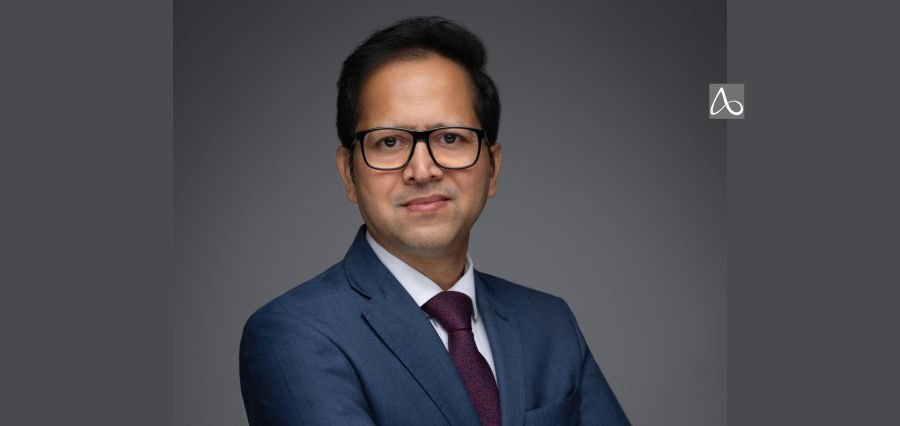
The sands of the Middle East and Africa carry the quiet promise of the future, which is being lit up not only by oil and gas, but also by strategic finance and resilient power infrastructure. This is a world where ambitious transformation meets acute need, where countries commit to net-zero ambitions while contending with the fundamental requirement of grid stability for millions. Success in this arena necessitates a distinct type of leadership: one who can read the geopolitical map, speak the language of high finance, and comprehend the logistical problem of powering a remote village. It necessitates the employment of an architect rather than a manager. Raja Srinivas Pedada is at the heart of this complication. As Managing Director/Consultant of Sabson Energy/Investment Company promoted by leading Industrial houses Sabson and Arab Fund Organization, he is a key player in directing funds and expertise toward crucial infrastructure projects in the MENA area. For three decades, he has easily transitioned from deep technical expertise to executive strategy, forming cross-border collaborations that turn frightening energy shortages into powerful, dependable, and bankable realities. His experience demonstrates how ethics, insight, and unwavering execution are laying the groundwork for a varied and sustainable economic future in the world’s most volatile markets.
A Vision Sharpened by Global Recognition
Raja Srinivas Pedada has earned numerous recognitions throughout his illustrious career. These acknowledgements are not merely a personal accolade; he sees them as a mandate that has profoundly refined his leadership strategy. He expresses humility regarding the honour, yet he uses it as a catalyst to become more deliberate in his work.
This strategic refinement centers on a commitment to long-term value creation at his investment company. He is leading the organization to make bold, thoughtful decisions. This involves strategic investment in clean energy initiatives and actively advancing financial inclusion across the region. For him, impact extends well beyond simple financial returns. He ensures that the group’s influence benefits communities as well as economies, emphasizing sustainability alongside profitability.
Raja Srinivas Pedada’s leadership approach actively accelerates innovation. He deepens collaboration with both public and private sector partners, recognizing that complex projects require shared vision. Furthermore, he dedicates significant effort to mentoring the next generation of regional leaders. This forward-thinking perspective ensures that the organization’s initiatives directly contribute to vital regional goals: energy transition, economic diversification, and economic resilience. He continuously sharpens his focus on sustainability and digital transformation, positioning the firm to help define what leadership in the new energy economy truly looks like. His personal philosophy dictates thinking beyond the immediate horizon, ensuring long-term impact.
The Resilient Architect of Critical Infrastructure
Raja Srinivas Pedada’s impressive track record includes overseeing major Independent Power Producer (IPP) projects and vital investments in regions that are remote or underserved. A powerful example is his leadership on the first IPP project in Hadhramaut, Yemen. Navigating projects in such volatile and complex environments requires a distinct approach that moves beyond conventional management.
He employs a differentiated leadership strategy centered on three dynamic practices when tackling challenging contexts.
- Adaptive Risk Strategies: Raja Srinivas Pedada learned early that a static risk register quickly becomes obsolete in volatile markets. When faced with a security issue that compromised a critical logistics route for the Yemen IPP, pre-built contingency plans, pre-vetted alternate suppliers, and flexible contracts allowed the project team to pivot rapidly and maintain construction momentum. He treats risk as a dynamic variable requiring continuous reassessment.
- Inclusive Stakeholder Engagement: Raja Srinivas Pedada understood that project continuity in challenging regions relies heavily on trust, not just on contractual agreements. He personally committed substantial time to building strong relationships with local ministry authorities and community leaders. By actively listening to their concerns regarding land use and employment and maintaining transparency about both the project’s benefits and its operational constraints, he secured crucial local ownership and resilience for the essential asset.
- Flexible yet Disciplined Timelines: He accepts that project delivery must look fundamentally different in highly complex settings. Facing seasonal constraints and unpredictable procurement delays, he restructured the original execution plan into phased milestones. This allowed the project to achieve Commercial Operation Date (COD) for initial power evacuation on a medium-voltage basis, even as the final, higher-voltage commissioning required more time. This flexible method ensured that the momentum was never truly lost.
This combination of rigor, agility, and credibility creates enduring project resilience. He argues that these qualities are far more valuable than speed alone in ensuring that a project successfully reaches financial closure and maintains long-term, reliable operation in a complex environment.
The Orchestration of Success: Control Versus Collaboration
Many of Raja Srinivas Pedada’s flagship energy projects are structured under the Build-Own-Operate (BOO) and Build-Operate-Own-Transfer (BOOT) models. This necessitates that Pedada navigate a crucial leadership trade-off: retaining control versus leveraging strategic partnerships. He recognizes that the fundamental leadership shift in his career has been moving from ‘owning outcomes alone’ to effectively ‘orchestrating success together’.
In BOO projects, where his organization holds permanent ownership, his focus remains on maintaining strict, world-class operational excellence while managing concentrated, long-term asset risks. Conversely, the BOOT model demands a more fundamentally inclusive leadership style. Success in this framework absolutely hinges on deep-seated collaboration with government entities and local utility partners. It also requires meticulous preparation for the eventual transfer of the asset, ensuring a seamless handover.
He identifies a second major trade-off: speed versus alignment. While holding full ownership allows for much faster, centralized decision-making, the BOOT models require him to deliberately slow down. He must invest significant time upfront in consensus-building and ensuring mutual understanding of goals. Raja Srinivas Pedada finds that this patient, comprehensive approach prevents much larger, more costly roadblocks from arising later in the project lifecycle. Finally, he regards the careful allocation of risk as a true test of executive leadership. Instead of attempting to hoard or unilaterally shed all potential risk, he meticulously allocates each specific risk component to the party, whether it is the private investor, the public utility, or the technical vendor, that is best equipped to manage it effectively.
Building Capital and Trust in Volatile Markets
Securing project finance in the current volatile global environment is, for Raja Srinivas Pedada, a process that transcends mere negotiation; it is fundamentally about building profound, lasting confidence with investors. He leads this critical process with absolute transparency, structures projects with essential operational flexibility, and relies heavily on a team that is not only technically exceptional but also widely trusted in the market. He asserts that integrity, clarity, and resilience are non-negotiable qualities because seasoned investors ultimately back the people as much as they back the projects.
His systematic approach to securing finance is rooted in rigorous preparation and deep strategic thinking. This critical process begins with a meticulous feasibility study and a comprehensive risk analysis. His teams must anticipate market, regulatory, and operational risks, designing robust mitigation measures that often include flexible financing structures. He firmly insists that the business case presented must be robust, completely transparent, and backed by highly credible, conservative financial modelling.
Communication is of paramount importance; Raja Srinivas Pedada engages openly and frequently with investors, presenting a crystal-clear picture of the project’s powerful potential and its built-in safeguards, while remaining deeply responsive to any concerns they raise.
Driving Operational Excellence and Shaping Change
Managing large-scale energy and infrastructure portfolios across the dynamic MENA region requires an unwavering commitment to financial discipline, complete transparency, and exceptionally strong governance. Raja Srinivas Pedada achieves this by establishing a structured and highly standardized organizational approach.
He implements rigorous investment appraisal processes. These include meticulous due diligence, comprehensive risk assessment, and detailed scenario planning, ensuring that every single project tightly aligns with the organization’s overarching strategic objectives. Clear, defined reporting lines and consistent, active oversight promote accountability and transparency to all stakeholders, from local governments to international financiers. Crucially, he places the highest priority on regulatory compliance and ethical practices, actively fostering a visible culture of integrity and seamless collaboration within all his operational teams. This disciplined, multi-layered approach allows him to drive multi-country portfolios that consistently meet ambitious financial targets and generate measurable long-term value and sustained operational excellence.
The energy sector is in a state of constant, rapid motion, driven by the swift evolution of renewables, the demand for grid stability, and new energy storage solutions. Raja Srinivas Pedada refuses to merely respond to this change; his organization’s goal is to actively shape its trajectory.
He personally steers the strategic direction by ensuring the organizational vision explicitly prioritizes renewable integration, immediate grid stability, and advanced energy solutions. This involves actively identifying emerging technologies and anticipating regulatory shifts rather than passively waiting for their impact to arrive. His organization demonstrates this proactive stance by investing heavily in predictive grid management systems, using them to act as a crucial load center for uninterrupted grid stability. They commit resources to viable integration and foster an internal culture of cross-functional innovation to pilot new, smart solutions early. This aggressive approach uniquely positions the firm to capture opportunities well ahead of the competition.
Leading Through Complexity with Collaborative Rigour
Raja Srinivas Pedada frequently operates across three demanding spheres simultaneously: the public, private, and regulatory. This requires him to navigate an environment where local regulations, international environmental standards, and the rigorous expectations of investors often appear to be in direct competition.
His leadership in this complexity starts with a clear, non-negotiable methodology: meticulously mapping all requirements across all three spheres and then bringing the diverse stakeholders into open dialogue very early in the project life. This essential process builds foundational trust and alignment. He often recalls a project where investors applied pressure for accelerated timelines while local regulators demanded extensive and time-consuming environmental safeguards. Instead of viewing these as conflicting or contradictory demands, Raja Srinivas Pedada reframed the entire conversation around a unified, shared outcome. He demonstrated clearly that stronger environmental safeguards, while adding initial complexity, would ultimately reduce long-term risks for investors while simultaneously securing the necessary and swift regulatory approvals.
Cultivating Internal Resilience and Future Leaders
To ensure that his operational and investment teams can successfully weather the inevitable logistical, political, or regulatory disruptions inherent in large-scale energy infrastructure, Raja Srinivas Pedada places a heavy emphasis on building deep internal resilience.
His core practices include fostering transparent, non-judgmental communication and comprehensive scenario planning. This methodology allows the teams to adapt quickly and effectively to disruptions. Crucially, he champions distributed decision-making. He empowers project leads and technical subject matter experts to take immediate initiative within their domains, a practice that significantly accelerates the team’s responsiveness during critical, high-pressure moments. He prioritizes psychological safety and visible team support, encouraging openness, constructive challenge, and creative problem-solving. This ensures individuals feel valued and remain highly motivated, even when working under intense, sustained pressure.
The Enduring Legacy of an Orchestrator
Raja Srinivas Pedada is a managing director who embodies the rare and potent leadership required for the next generation of energy investment. He does not view capital as merely money; he views it as potential energy that must be precisely directed to create maximum foundational impact. His philosophy is one of unrelenting integration: he combines sharp vision with flawless execution, looks far ahead while acting decisively in the present, and leads by setting a clear, collaborative example. The scale of the challenges he tackles, from securing first-of-its-kind IPPs in Hadhramaut to structuring multi-million-dollar portfolios with the Funding organizations, is matched only by his commitment to integrity and long-term value creation. He is successfully navigating one of the most exciting and complex eras in the history of the MENA region, and his enduring focus on partnership, resilience, and ethical operation is not just delivering projects; it is actively defining the new energy economy. Raja is a pivotal figure transforming the role of project executive into that of a strategic architect, ensuring that his organization remains firmly at the forefront of the region’s historic, necessary, and unstoppable energy transition. His work will continue to power progress for decades to come.