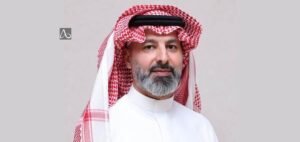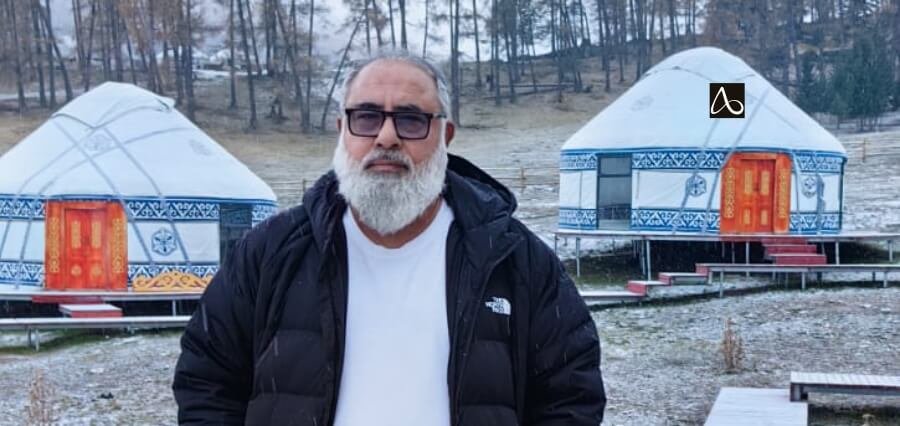
Before the boardrooms. Before the billion-riyal projects. Before the SCADA systems and the railways and the automation blueprints that now carry his name there was a boy, a piece of land, and a question that would define everything: what more can this become? Dr. Mohammad Niqab Khan, CEO of Ambela Business & Technology Center for Contracting, has spent a lifetime answering that question. As a child, Dr. Khan put small pieces of land to work cultivating vegetables not only for his own household but for his neighbours as well. It was an early, instinctive exercise in resource optimisation: identifying what was available, understanding its potential, and directing it toward productive outcomes. The scale was modest. The mindset it forged was not.
That same orientation followed him as he progressed through his academic and professional life, drawing him toward technical education and, eventually, toward a career that would place him at the intersection of automation, digital transformation, and industrial technology. The most consequential chapter of that progression arrived when he assumed responsibility for Siemens’ Automation Business in Saudi Arabia a role that sharpened his understanding of how technology, when intelligently deployed, becomes a force multiplier for human effort and industrial performance.
In 2024, he channelled the accumulated expertise of that journey into the founding of Ambela Business & Technology Center for Contracting, headquartered in Jeddah. The organization operates across Building Technology, Oil and Gas, Industrial, and Water divisions sectors he identifies as the driving forces of the regional and global future.
“The ability to appreciate the resources available around me, integrate and utilise them, and turn them into productive outcomes is what shaped this mentality and leadership style,” he affirms.
Building on Firm Ground
Dr. Khan does not subscribe to the school of transformation for transformation’s sake. His approach to technological advancement is disciplined and sequential grounded in the conviction that innovation without a stable foundation is an exercise in risk rather than progress.
Before any organization reaches for the next stage of digital capability, he argues, it must first consolidate and sustain what it currently operates. Any technological transition introduces friction. Systems slow. Gaps emerge. Teams adjust. The organizations that navigate these transitions successfully are those that enter them from a position of operational strength with the resources, the inflow, and the institutional stability to absorb disruption without surrendering continuity.
This principle shapes how ABTC approaches its client engagements and its internal development. The organization does not chase novelty. It pursues suitability assessing each technological solution not merely for what it promises on paper, but for what it delivers in practice, over time, within the specific constraints and demands of the environment in which it must operate.
“We have to sustain the current state first. This ensures that you have the necessary resources and inflow to support the innovation process,” he states.
The Science of Selecting the Right Technology
Few decisions carry greater long-term consequence for an industrial organization than the selection of its core technologies. Dr. Khan approaches these decisions with a methodological rigour that draws on deep technical knowledge and hard-won operational experience.
His framework begins with deep thinking, a tool he treats not as a luxury but as a professional obligation. He cites the slogan of European semiconductor manufacturer Infineon Technologies — Never Stop Thinking — as an expression of the intellectual standard he sets for himself and his teams. Before any technology recommendation is made, the current state of the subject must be thoroughly understood. Physical interfaces, processing requirements, prospective outcomes, and functional demands must all be mapped and evaluated.
Beyond technical suitability, he applies a set of criteria that govern the long-term viability of any solution. Proven track record matters. Supplier support matters. But two factors hold particular weight in his framework: replaceability and standardisation.
A technology that creates dependency on a single vendor, a proprietary system, or a support structure that may not endure introduces a structural vulnerability that no level of short-term performance can justify. The solutions ABTC recommends and implements are designed to be replaceable with standardised alternatives if circumstances demand. This is not defensive thinking. It is the architecture of resilience.
The objective, as he frames it, is never simply to adopt the newest available technology. It is to select a solution that is technically appropriate, operationally proven, sustainably supported, and capable of generating meaningful long-term value.
Building Teams in a Dynamic Environment
The challenge of assembling and retaining high-capability teams in a field defined by constant technological evolution is one that Dr. Khan addresses with the same systematic discipline he applies to technology selection.
ABTC maintains a structured database of candidates, categorised according to skills, capabilities, and alignment with different technological domains. When a team-building or upgrading need arises, the organization draws from this database against a clearly defined set of requirements. The system is not infallible he acknowledges learning opportunities within it, but it provides a consistent and intelligence-driven foundation for talent decisions.
Beyond recruitment, his approach to team development is rooted in close engagement. He monitors progress, follows up with urgency, and grooms his people toward the specific skillsets that his projects demand. He acknowledges, with characteristic candour, that this pace can create initial friction. Teams unaccustomed to the tempo may bristle at the follow-through. But the outcome, consistently, is an organization that operates with precision and speed.
His broader talent philosophy is relational. He treats every professional connection, whether with a team member, a training facility, an information source, or a technology vendor, as a resource to be cultivated and maintained. In a field where capabilities shift rapidly, the network is the infrastructure.
“Every resource is a connection that we maintain by networking with people, training facilities, information sources, and vendors to understand what technologies are available and what capabilities are required to implement them,” he states.
Landmark Projects That Define a Career
Dr. Khan is measured in how he characterises achievement. He does not rank his projects by prestige or scale. Instead, he holds to a simpler standard: whatever is undertaken must be made successful, and success is the product of deploying one’s full capability and capacity toward the objective.
By that standard, his career carries several chapters that stand apart.
The Clock Tower SCADA System in Saudi Arabia represents one of its most complete expressions. From initial design through programming, implementation, and final handover, he managed the full lifecycle of the project a systems integration undertaking of considerable technical complexity, delivered with the end-to-end ownership that defines his professional signature.
The Zamzam Water Well project and the North South Railway project round out a portfolio that spans critical infrastructure at the highest levels of national significance. Each project carried its own distinct technical demands, its own stakeholder landscape, and its own set of variables to be managed in real time.
Looking back on these engagements, he does not speak in the language of accolades. He speaks in the language of accomplishment of looking back and recognising that something distinguished has been created.
Sustaining Performance: The Discipline Behind the Leader
The demands of leading a technology and automation business across multiple divisions, client environments, and project lifecycles are formidable. Dr. Khan manages them through a set of personal disciplines as deliberately constructed as any of the systems he designs.
He keeps his engagements purposeful and his relationships precise whether in his professional or personal life. He avoids unnecessary debates and maintains clarity in every interaction. Physically, he sustains himself through a regimen that includes weights, boxing, and walking, accommodating the demands of a schedule that frequently places him behind the wheel between projects, meetings, and business commitments across the region.
The open roads of Saudi Arabia, with their desert landscapes and the occasional sight of camels and sheep, offer him a form of active recovery a moving meditation that relieves stress and returns him to himself. In Pakistan and China, where his travels take him, long walks through green mountains and hilly terrain serve the same restorative purpose. Time with village elders and family in Pakistan carries a grounding quality that no boardroom can replicate.
His nutritional approach is equally deliberate: low carbohydrates, minimal sugar, high protein, healthy fats, and the steady companionship of black coffee and green tea. These are not incidental habits. They are the physical infrastructure of a leader who operates at sustained intensity.
A Vision for the Next Generation
Dr. Khan’s visionary aspirations are as systematic as his professional philosophy. He is presently planning a full-scale, integrated training institute dedicated to automation and digitization, supported by a manufacturing unit of technology-based solutions, which would be developed in partnership with carefully chosen organizations and firms. The endeavour would benefit the Building Technologies, Oil & Gas, Industry, and Water departments, which he deems crucial for the region’s future.
In essence, this project would be an institutionalization of all that he has been working hard to create throughout his life: the knowledge, the connections, the approach, and the dedication to develop people capable of carrying technological capacity forward.
His advice to the upcoming generation of leaders is typical of him: Find your purpose. Build your knowledge constantly. Keep yourself up-to-date, up-to-date, accessible, and involved. And then start. “If you take on one job at a time, even just one job a day, you will have accomplished 365 jobs in a year. If those jobs are related to technological innovation, you can change the story of a country,” he says.
At Ambela Business & Technology Center for Contracting, Dr. Mohammad Niqab Khan is already writing that story one project, one system, one leader at a time.