Education has been the first step to progress and potential in an era of swift advancement and unremitting development of thought. Visionary thinkers all over the world are transforming the process of sharing and applying knowledge to impact the world in a massive manner. This new generation of leaders has been able to inspire collaboration and creativity in the Arab region as they combine both tradition and technology and they are full of intellect and ambition.
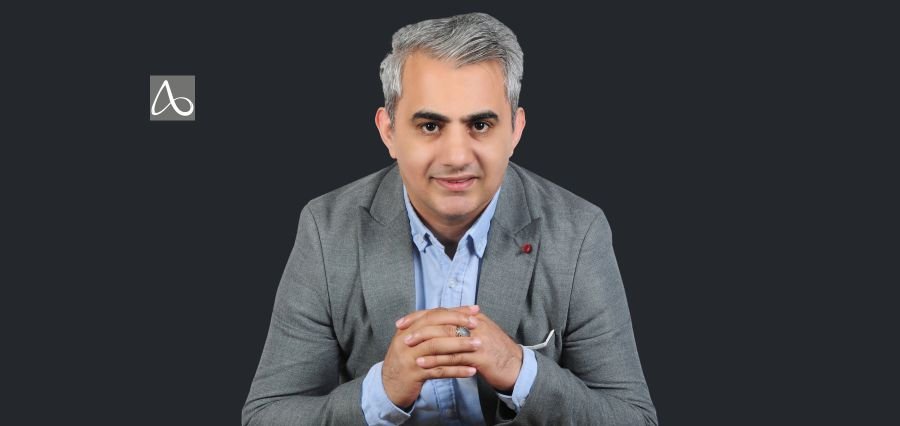
Among them, one of the most progressive academic leaders of the region, an unstoppable networker, catalyst, and economist, is Yousef Qawqzeh. He is an Associate Professor at Khawarizmi College in Amman, Jordan, and is spearheading a renewal in education based on one simple, yet revolutionary faith: the future is those who learn how to construct it jointly.
A Philosophy of Connection
The philosophy that shapes Yousef’s leadership is rooted in a commitment to building collaborative ecosystems rather than merely managing teams. He views himself as a connector and catalyst, intentionally creating environments where diverse talents can interact, collaborate, and cross-pollinate ideas. Through this approach, synergy becomes the norm, and transformative ideas emerge from the collective intelligence of the community.
He sees himself not just as a teacher or a manager, but as a connector and catalyst: someone who intentionally brings together diverse talents to spark interaction and cross-pollination of ideas. Within these carefully nurtured environments, synergy becomes natural. “That’s when transformative ideas arise, from the community’s collective intelligence,” he explains.
This mindset has become the foundation of everything Yousef Qawqzeh does everything from classroom instruction to regional research initiatives, turning Khawarizmi College into a living lab of collaboration.
Redefining Education for a New Arab Century
The Arab region, rich in history and human capital, is undergoing a dramatic transformation, from an economy of natural resources to an economy of knowledge. Yousef’s work aims to ensure that education leads this shift, not lags behind it.
“My work is about future-proofing our region’s greatest asset: its minds,” he says. To him, education is not merely about transferring information but about generating it. His approach turns students from passive recipients into active creators of knowledge, people capable of producing original ideas, driving innovation, and solving the complex challenges facing their societies.
In his classrooms and research labs, learning is not confined to theory. It’s a living, breathing process that mirrors the world outside, unpredictable, interdisciplinary, and constantly evolving. This approach is steadily redefining what it means to be an Arab scholar in the 21st century.
Measuring Impact Beyond Publications
For many in academia, success is measured by citation counts and conference presentations. For Yousef Qawqzeh, impact is something far more tangible, something that can be seen in the confidence and capability of his students.
To him, impact is the tangible proof that they are successfully future-proofing their region’s minds. It is measured not only by publications but by the capabilities we create, witnessing students become innovators and job creators, not just job seekers.
True impact, he insists, is when research leaves the pages of journals and enters the real world, when theory becomes a prototype, a start-up, a solution. His own projects exemplify this principle: turning advanced research into tools that directly address regional needs, from healthcare to smart community systems.
“Ultimately, true impact means building a self-sustaining cycle,” he adds, “where today’s knowledge fuels tomorrow’s prosperity, confidence, and intellectual leadership in the Arab world.”
Cultivating a Sandbox Culture
In Yousef’s innovation labs, you won’t find silent rows of note-takers. Instead, you’ll find students building, experimenting, and occasionally failing, by design.
He cultivates innovation by creating a ‘sandbox culture’ that champions learning through building. This is a space where intelligent risk-taking is encouraged, and failure is reframed as feedback. Students are urged to think across disciplines and work on real-world problems, projects that matter to their communities.
For instance, one student team recently developed AI-driven smart systems tailored to local community challenges. Through that experience, they didn’t just learn theory; they lived it. The process instilled adaptability, creative confidence, and a sense of purpose that no textbook could replicate.
This experiential model is changing how students perceive learning, from something to consume into something to create.
A Defining Moment in Leadership
Among his many accomplishments, one stands out as a defining leadership moment: spearheading a collaborative research consortium that brought together top Arab scientists to explore pioneering AI applications in healthcare, cybersecurity, the Internet of Things, and smart communities.
What began as an ambitious idea evolved into a regional movement. “We aligned our expertise with pressing regional needs,” Yousef Qawqzeh recalls. It demonstrated that Arab scholarship can produce research of deep local impact and strong global relevance.
The consortium didn’t just publish papers, it created a framework for sustained, cross-border collaboration that continues to influence academic partnerships across the Middle East. For many younger researchers, this initiative became a model of what academic leadership in the Arab world could look like: visionary, collaborative, and deeply rooted in local realities.
Staying Inspired at the Crossroads of Disciplines
For someone who operates at the cutting edge of artificial intelligence and smart systems, intellectual curiosity is both a fuel and a compass. Yousef Qawqzeh stays inspired by positioning himself at the intersection of disciplines, where technology meets humanity, and data meets ethics.
He actively engages in global collaborations, mentors the next generation of researchers, and remains a lifelong learner who embraces emerging technologies and their ethical implications.
For him, inspiration comes not just from technological breakthroughs but from the questions they raise about responsibility, inclusion, and the social impact of innovation.
This mindset ensures that his work never becomes isolated in theory. Every project, every collaboration, every paper carries a human thread, a reminder that technology, at its best, is a tool for empowerment.
When Research Meets Real Life
Of all his achievements, one holds special meaning for Yousef Qawqzeh : leading a pioneering project that applied AI and machine learning to healthcare diagnostics across the Arab region. The project produced a prototype system now under consideration by local healthcare partners, a rare instance where academic research translated directly into social good.
“This work bridged theory and practice,” he says with quiet satisfaction. It showed that their research could directly improve lives and position Arab scholarship as a driver of innovation with global relevance.
Beyond its technological success, the project symbolized something greater, a validation that regional institutions could lead, not just follow, in the global research landscape. It was proof that innovation from the Arab world could both serve its people and contribute meaningfully to global knowledge.
Balancing Vision and Execution
Every visionary faces the challenge of managing the present while building the future. For Yousef Qawqzeh, the key lies in seeing daily responsibilities as part of a larger mosaic.
“I balance vision with execution by treating daily responsibilities as steppingstones toward larger goals,” he explains. Through strategic delegation, clear prioritization, and constant reflection, he ensures that immediate tasks never eclipse the mission of transforming education and research.
This balance allows him to remain grounded while steering long-term institutional transformation, a quality that has earned him the respect of peers and the trust of his students.
The Heart of Leadership: Mentorship
In conversations about innovation and leadership, Yousef Qawqzeh often pauses to highlight something easily overlooked: the transformative power of mentorship.
For him, true leadership is not only measured by institutional achievements but by the individual journeys of students and young researchers whose potential has been unlocked.
“Investing in mentorship ensures that our impact multiplies far beyond our own careers,” he says.
This philosophy has inspired a generation of students who see in him not just a professor, but a guide, someone who opens doors, nurtures confidence, and models intellectual generosity. Through mentorship, Yousef Qawqzeh is cultivating leaders who will, in turn, mentor others, creating a ripple effect of innovation and purpose across the Arab academic landscape.
A Vision That Looks Beyond Today
When asked about the legacy he hopes to leave, Yousef’s answer is as forward-looking as his work: “I hope my legacy will be a generation of Arab scholars and innovators who see AI and smart systems not as imported knowledge, but as fields they shape and lead globally.”
He envisions a future where Arab universities are recognized as hubs of innovation, where students are not followers of trends but creators of them, and where research directly contributes to societal resilience and global dialogue. He believes that education must evolve into a living ecosystem that nurtures creators, problem-solvers, and ethical innovators equipped to shape the future rather than merely adapt to it.
That single sentence captures the essence of his mission, to transform education into an ecosystem that grows intelligence, imagination, and integrity all at once.
The Ripple Effect of a Future-Focused Leader
At Khawarizmi College, founded in 1978 and known for its pioneering spirit, Yousef’s influence extends far beyond his department. His interdisciplinary programs, collaborative research models, and mentorship initiatives have turned the institution into a microcosm of what education in the Arab world could become: dynamic, inclusive, and impact-driven.
Students who pass through his mentorship often describe the experience as transformative. They leave not only with technical skills but with a mindset, a belief that they are part of something larger, something that can reshape their region’s future. In every success story that follows, there is a trace of his philosophy: learn, build, connect, and give back.
A Legacy in Motion
As he continues to lead projects that merge artificial intelligence, education, and social progress, Yousef Qawqzeh exemplifies what it means to be an academic leader for a changing world. His story reminds us that leadership in education is not about titles or tenure, it’s about imagination, empathy, and the courage to build together.
In every lecture, in every research initiative, and in every student he mentors, Yousef Qawqzeh is quietly shaping a legacy, one where knowledge serves humanity, and the Arab region stands at the forefront of global innovation.
He often says that the greatest measure of success is not how far we climb, but how many others rise with us. By that standard, his journey is already a resounding success, a testament to what happens when leadership begins with collaboration and ends with creation.