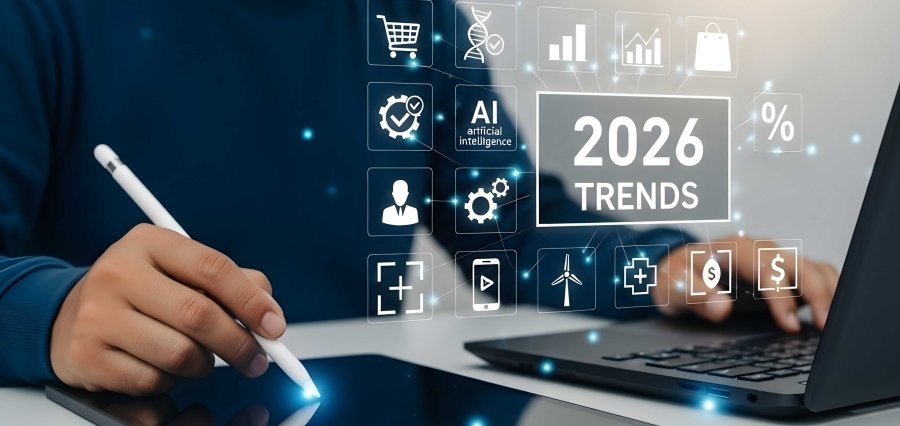
The modern business landscape is evolving faster than ever before. Companies across the world are adapting to changing consumer behavior, digital transformation, and rapid innovation. As organizations compete to remain relevant, future business trends are becoming closely connected with innovation, automation, and smarter operational strategies. Businesses that fail to adapt may struggle to survive in a marketplace increasingly driven by technology and customer expectations.
At the center of this transformation lies the rise of emerging business technologies that are redefining how industries operate, communicate, and deliver value. From artificial intelligence to blockchain and immersive digital experiences, technology is no longer a support system for businesses—it has become the foundation of growth itself.
Artificial Intelligence Becoming a Core Business Necessity
Artificial intelligence is no longer a futuristic concept reserved for tech giants. It is now influencing everyday business operations across industries such as healthcare, retail, finance, logistics, and education. Companies are using AI to automate repetitive tasks, improve customer support, analyze market behavior, and enhance decision-making processes.
One of the biggest future business trends is the integration of AI into customer experience. Businesses are relying on intelligent chatbots, predictive recommendations, and data-driven personalization to improve engagement. Consumers now expect brands to understand their preferences instantly, and AI helps organizations meet those expectations with precision.
At the same time, machine learning systems are helping businesses identify patterns and forecast future opportunities. These tools allow companies to reduce risks, improve productivity, and make faster strategic decisions. As a result, organizations investing in emerging business technologies are likely to gain a competitive edge over traditional business models.
Remote Work and Digital Collaboration Redefining Corporate Culture
The global shift toward remote and hybrid work environments has permanently changed workplace culture. Companies are increasingly focusing on flexibility, employee well-being, and digital collaboration rather than traditional office-based structures. This transition has encouraged businesses to invest heavily in cloud platforms, virtual communication tools, and cybersecurity systems.
Among the strongest future business trends is the idea of decentralized workforces. Businesses are now hiring talent globally instead of restricting recruitment to local markets. This has opened doors for greater diversity, cost efficiency, and round-the-clock productivity.
Digital collaboration platforms are also evolving rapidly. Video conferencing, virtual workspaces, and project management tools have become essential for modern operations. Alongside this, emerging business technologies like augmented reality and virtual reality are beginning to create immersive meeting experiences that may redefine communication in the coming years.
Organizations that successfully build strong digital cultures will likely attract better talent and maintain higher employee satisfaction in the future.
Sustainable Innovation Driving Business Decisions
Sustainability is no longer just a corporate responsibility initiative. It has become a major factor influencing consumer trust, investor confidence, and brand reputation. Businesses are under increasing pressure to adopt environmentally responsible practices while maintaining profitability.
Consumers today prefer companies that demonstrate ethical sourcing, reduced carbon emissions, and sustainable production methods. Because of this, future business trends are heavily focused on green innovation and energy-efficient operations. Businesses are redesigning supply chains, packaging systems, and manufacturing processes to align with global sustainability goals.
Technology is playing a major role in this shift. Smart energy systems, data-driven resource management, and blockchain-based transparency tools are helping businesses monitor and improve sustainability efforts. These emerging business technologies not only reduce environmental impact but also improve operational efficiency and long-term profitability.
In many industries, sustainability is becoming a key differentiator. Companies that embrace environmentally conscious innovation are more likely to build lasting customer loyalty and stronger market positioning.
Data, Cybersecurity, and Consumer Trust in the Digital Age
As businesses become increasingly digital, data has emerged as one of the most valuable assets in the modern economy. Companies collect vast amounts of information to understand customer behavior, improve marketing strategies, and optimize operations. However, this growing dependence on data also creates significant security challenges.
Protecting customer information has become one of the most critical future business trends influencing corporate strategy today. Consumers are more aware of privacy concerns and expect businesses to safeguard their personal information responsibly. A single data breach can damage reputation, reduce trust, and lead to major financial losses.
To address these concerns, organizations are investing in stronger cybersecurity systems powered by automation and real-time monitoring. Emerging business technologies such as biometric authentication, blockchain security frameworks, and AI-driven threat detection are helping companies strengthen digital protection.
Trust is becoming a currency in the digital world. Businesses that prioritize transparency, ethical data practices, and secure digital environments are likely to maintain stronger relationships with customers and stakeholders.
Looking Toward a More Intelligent Business Future
The future of business will be shaped by adaptability, innovation, and technological integration. Companies that embrace transformation early will have greater opportunities to lead their industries and build long-term resilience. Changing consumer expectations, workforce evolution, and rapid digital advancement are pushing organizations toward smarter and more flexible operating models.
As future business trends continue to evolve, the role of emerging business technologies will become even more influential in defining success. Businesses that combine human creativity with technological efficiency will be better prepared for the demands of a constantly changing global economy.