The legal profession has prided itself on tradition for many years, which basically means that everything has been done in accordance with precedence and the way things have always been done over many years. But over the past decade, everything has changed quite unexpectedly. In the legal department, in the law firms, and in the corporate compliance departments, technology is not any longer something that has been added into the legal process; rather, technology has become an integral part of the process of legal practice, which has changed the way contracts are reviewed and risks assessed and the way lawyers use their most valuable asset, which is their time. Of course, the change has happened not just due to the outsiders who are technologists; it has happened due to insiders who knew the legal environment well but were not part of the profession.
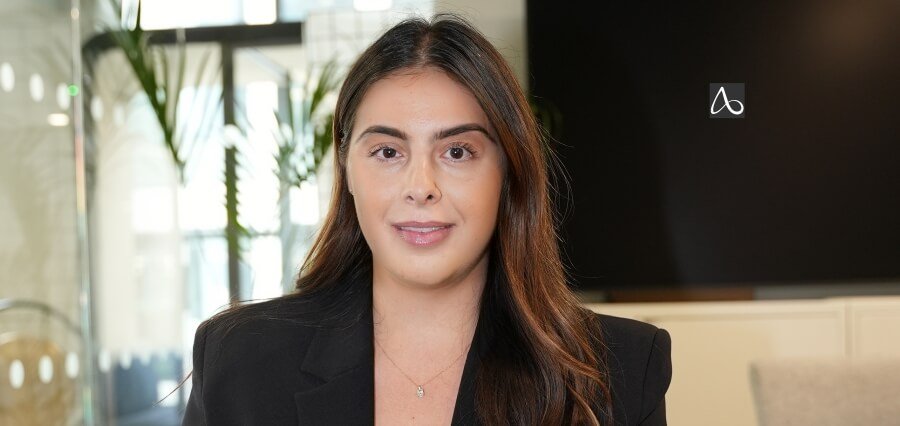
Theodora Georgiou is one such leader. As the Vice President of Customer Success at LEGALFLY, a Legal AI company which was founded in 2023 and currently has offices in Ghent, London and Dubai, she has a role that straddles the worlds of law, technology, and trust. Her career has never followed the conventional trajectory of a practising lawyer, yet few people have spent as long trying to navigate and solve the problems of legal departments as she.
A Career Built on a Single Moment
Georgiou’s path into legal technology began not with a courtroom, but with a workshop. After completing her studies, she joined one of the world’s largest legal data companies in London, where, within her first year, she attended a session on the emerging era of legal technology. It proved to be a defining moment. “It was one of those moments where everything just clicked, technology was going to change how legal work gets done, right at the core of it,” she recalls. That realisation set the direction for more than a decade of her career, spent working alongside international law firms and enterprise legal teams to understand precisely what slowed them down, and building the tools to remove that friction.
Building Trust Inside Regulated Teams
At LEGALFLY, Georgiou’s remit extends well beyond product rollout. Her role involves overseeing onboarding, adoption, and long-term partnership with in-house legal, compliance, and procurement teams operating within highly regulated enterprises. In an industry where caution toward new technology, particularly anything touching sensitive data, is not just common but appropriate, she views her responsibility as fundamentally one of trust-building. She explains that a significant part of the value her team creates lies in demonstrating precisely how a tool handles a client’s documents, and ensuring human judgment remains firmly in the hands of the legal professionals themselves. The broader contribution to the legal community, she argues, lies in proving that adopting artificial intelligence need not mean sacrificing quality for speed. Done properly, it frees legal teams to focus on judgment calls, while high-volume tasks such as contract review, risk flagging, and due diligence consolidation move faster and more consistently in the background.
A Leadership Philosophy Rooted in Proximity
This balance between innovation and restraint runs through Georgiou’s entire leadership philosophy, which she describes as having evolved considerably over the course of her career. Early on, she believed leadership meant being the expert with every answer. Her years in leadership reshaped that view, teaching her that effective leadership is instead about building a team that takes genuine ownership of its work and learns as it progresses. Staying close to both her team’s day-to-day realities and her clients’ actual needs, she says, is where good decisions ultimately come from. As she puts it, “Patience paired with urgency, pushing hard on what needs to move while protecting people’s space to do real work instead of just putting out fires. That’s how you build something people actually trust.”
Ethics Over Pitch
That same conviction extends to how Georgiou approaches ethics and client trust. Operating adjacent to legal practice rather than within it in the traditional sense, she is acutely aware of the seriousness of the information her clients entrust to her company. Confidentiality and sensitivity, she notes, shape every aspect of how a legal technology company should function, from rigorous data handling standards to transparency about a tool’s actual capabilities. Crucially, she resists the temptation to overstate what artificial intelligence can deliver simply to close a deal, insisting instead that credibility is earned through honesty about limitations rather than persuasive pitching.
Staying Grounded in a Fast-Moving Industry
Remaining relevant in a fast-moving industry, Georgiou explains, requires dividing her attention between the evolution of the technology itself and the people who use it daily. She places particular weight on direct exposure to clients sitting in on calls, listening for where legal teams encounter friction, and treating every conversation as a genuine data point about where the industry is heading, rather than relying on assumptions about its trajectory. This grounded, client-facing approach, she says, keeps her work rooted in reality rather than theory.
Challenges That Shaped Her Convictions
Georgiou is candid about the obstacles that have shaped her leadership perspective. Building a career in legal technology as a woman meant she could not simply replicate the paths others had taken before her; she had to develop confidence in her own vision and make difficult decisions that sometimes ran counter to convention. That conviction was tested further when she left an established company with institutional backing to help build LEGALFLY, an environment in which every client relationship and every decision had to be earned independently.
Navigating the legal profession’s broader scepticism toward artificial intelligence reinforced a lesson she now considers central to her leadership: trust is not claimed but built through consistent performance and transparency. “Being different isn’t a liability, it’s an asset when you commit fully to it,” she says, a philosophy that continues to inform how she leads today with conviction in the vision, confidence in difficult decisions, and a belief that pushing through boundaries produces something genuinely distinctive.
Milestones That Mattered Most
When reflecting on the milestones that matter most to her, Georgiou points not to industry recognition, but to quieter, more personal markers of progress. Advancing from a graduate role to senior leadership within eight years taught her that growth comes from consistent delivery paired with a willingness to step outside one’s comfort zone. Equally significant, she says, has been building strong, motivated teams whose members genuinely invest in the work and in one another watching people grow under her leadership and feel a real sense of ownership in what they are building together. She also cites finding her voice as a leader as a defining milestone, having moved from initial discomfort speaking in rooms full of industry experts and clients to standing confidently before legal teams, investors, and conference audiences.
Culture, Collaboration, and Continuous Learning
That commitment to raising standards extends to how Georgiou fosters culture within her own organisation. For her, excellence means an unwillingness to compromise on data handling or on honest communication about what artificial intelligence can and cannot do. Collaboration means ensuring product teams, customer success, and legal experts communicate openly rather than operating in silos, while continuous learning involves bringing clients in to share their experiences and treating every challenging client situation as an opportunity to improve. Contributing to the profession more broadly, she believes, means being publicly honest about where technology genuinely helps, and where it falls short.
Advice for the Next Generation
For aspiring legal professionals looking to build meaningful careers within the Arab legal landscape specifically, Georgiou offers pointed advice. She urges newcomers to first understand the distinct regulatory environment, client expectations, and opportunities that define the region, rather than assuming global norms apply uniformly. She also encourages professionals not to assume a traditional path is the only route to impact, drawing on her own experience of building a meaningful career inside the legal profession without ever practising as a lawyer. Staying curious about regulatory, technological, and client-driven change, she notes, is where real impact ultimately happens, alongside relationships built on demonstrated competence and trust rather than connections alone.
Looking Ahead: Technology in Service of Judgment
Looking ahead, the focus of Georgiou’s dreams is to change the way the legal profession views technology changing its view from technology being a threat to actually enabling them to work better. This is achieved through having a new generation of legal practitioners embrace artificial intelligence since it has been created with their interests at heart and not just shoved down their throats. Her legacy as she would wish to leave behind is to prove that technology is not only strong but also respectful to the legal judgment and ethics.