Industries built on heavy manufacturing and industrial materials rarely undergo quiet transformation. They shift under the weight of infrastructure demands, supply chain pressures, decarbonization targets and the constant push to do more with less. Leading through that kind of complexity requires more than operational know-how. It requires the ability to read markets, build teams that can execute across very different environments, and make calls under uncertainty without losing sight of where the business needs to go.
In industries as demanding as steel, cement, and more, where refractory solutions and operational complexity is high, customer expectations are exacting, and the pressure to perform is relentless, this kind of leadership carries particular weight. It requires people who have worked close to the ground, understand what transformation actually demands from an organization, and are willing to make difficult decisions without losing sight of the people and relationships that make sustained performance possible.
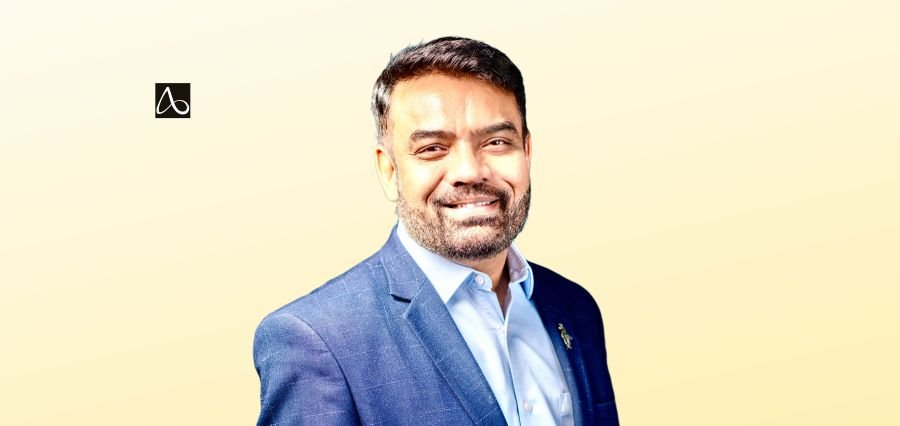
Hakimuddin Ali, President, Middle East, Türkiye and Africa Business Head at RHI Magnesita, brings exactly that depth of experience to his role. His career across operations, strategy, and transformation has been built on one consistent belief: that sustainable success is never just a financial outcome. It is the result of empowered people, trusted relationships and leadership that remains accountable through every stage of the journey. He says that ‘People don’t follow strategies – they follow leaders who they trust.’
A Leadership Journey Shaped by Experience
Hakimuddin believes that every leadership journey is shaped by moments that test the ability to adapt, decide, and lead with clarity. His career spanning operations, strategy, and transformation across steel, cement, and refractories has been fundamental in shaping that perspective.
Beginning his career close to operations gave him valuable experience in execution and discipline. As his responsibilities expanded across industries and geographies, he developed a broader understanding of how complex global businesses operate. Leading businesses through transformation, whether by scaling growth or turning around underperforming operations, became defining moments in his career, reinforcing the importance of resilience, decisive leadership, and a long-term perspective over short-term gains.
One example that reflects this philosophy came while he was with Dalmia Cement, where he was entrusted with reviving a barren plant in the midst of the Covid-19 pandemic. Rather than driving change through top-down directives, Hakimuddin focused on building ownership within his leadership team, turning the deserted plot into a fully functional, branded cement plant within eleven months by keeping his people united, motivated, and resilient despite external adversities. As he puts it, the role of a leader is not to create followers but to create more leaders.
Throughout this journey, one principle has remained constant: “Leadership is about accountability and empowerment.” He believes sustainable success comes from building strong teams, fostering trust, and enabling people to take ownership.
This same philosophy has guided him more recently while leading the META (Middle East, Türkiye and Africa) region through a period of geopolitical disruption, where his priority was ensuring the physical and psychological safety and security of his teams while maintaining business continuity, drawing on the adaptability and cultural understanding he has built across diverse markets.
Hakimuddin believes the best leaders create environments where people are trusted to make decisions and held accountable for outcomes, developing leaders throughout the organization rather than concentrating decision-making at the top.
Leading Diverse Markets with a Global Mindset
Leading across META requires balancing consistency in values with flexibility in execution. Hakimuddin anchors his leadership in trust, accountability, and a strong people-centric mindset. He believes relationships form the backbone of effective leadership, particularly in multicultural environments where alignment cannot be assumed and must be built deliberately.
While these principles remain consistent, their application changes according to each market’s cultural, economic, and regulatory environment. Listening is therefore an essential leadership skill. Having led businesses across India, Europe and the Middle East, Hakimuddin believes that the first responsibility of a leader entering a new market is not to introduce change immediately, but to understand the people, culture and customer realities that already exist. He often spends time engaging with employees and customers before making strategic decisions, believing that sustainable transformation begins with listening rather than prescribing solutions. This approach also aligns with RHI Magnesita’s cultural themes of acting in a customer-focused manner and offering innovative solutions.
Another important aspect of Hakimuddin’s leadership philosophy is empowerment. He believes that in diverse geographies, centralized decision-making has its limits. Success comes from enabling strong local leadership by giving teams the clarity, trust, and autonomy to act while staying aligned with a common vision. At RHI Magnesita, the organization follows open decision-making in a respectful environment and operates cross-functionally, collaboratively, and practically across the organization. This helps the company operate in a performance-driven and accountable manner.
He views leadership as an evolving practice. He believes that different markets and challenges demand different responses, and that remaining adaptable while staying true to core values is essential. Continuous learning, curiosity, and openness to different perspectives are what enable leaders to navigate complexity effectively. For him, effective leadership is about leading with a global mindset, executing with local insight, and building empowered teams that can perform successfully within their unique environments.
Driving Business Through Innovation
Hakimuddin sees several powerful shifts shaping the future of business across the Middle East, Türkiye, and Africa, including industrial transformation and infrastructure growth, digitalization and data-driven decision-making, sustainability and energy transition, and supply chain resilience with greater localization.
He points to RHI Magnesita’s 4PRO as an example of how the organization has adapted to changing industrial requirements and increasing demands for refractories and process control. Built around the principles of planet, people, performance, and partnerships, 4PRO extends far beyond refractory products, with a portfolio that includes recycled products, robotics, sensors, digital solutions, decarbonization initiatives, and green steel solutions.
For him, organizations that successfully integrate innovation with operational excellence will be best positioned to lead. Transformation, he believes, succeeds when technology, people and purpose move in the same direction.
Leading with Clarity and Purpose
Throughout his career, Hakimuddin has encountered situations where decisions carried significant uncertainty, including a defining period of volatility that required difficult decisions while maintaining team confidence.
These moments reinforced the importance of clarity, transparency, and decisiveness. Even when outcomes remain uncertain, teams look to their leaders for direction and stability. What employees expect most in such moments, he notes, is not certainty but honesty, direction, and consistency.
Empowering Teams, Driving Performance
Hakimuddin believes, “High-performing teams are built on trust, accountability, and continuous development.” His leadership focuses on empowering individuals to take ownership, encouraging diverse perspectives, and creating an environment where innovation is safe and supported.
When people feel valued and aligned with a shared purpose, strong performance follows naturally. At RHI Magnesita, this philosophy is strengthened through open decision-making, respectful collaboration, customer focus, and an innovative approach that enables teams to work cross-functionally across the global organization.
Balancing Present Performance with Future Growth
For Hakimuddin, balancing immediate performance with long-term growth is one of the defining challenges of leadership. He believes every short-term decision should remain aligned with the organization’s long-term strategic direction, requiring discipline in prioritization and continuous evaluation of where time and resources should be invested, so that present-day objectives support future ambitions.
Remaining Agile in an Evolving Marketplace
Customer expectations and business priorities continue to evolve, making agility an essential capability for every organization. Hakimuddin believes remaining relevant requires organizations to be agile, responsive, and deeply customer-centric, strengthening customer partnerships, leveraging data and insights, and improving operational efficiency. “Agility is not just about speed, it’s about making informed decisions quickly and effectively,” he says.
Defining Success Beyond Financial Results
Although financial performance remains a critical business measure, Hakimuddin views success more broadly, evaluating it through employee engagement, customer satisfaction and trust, operational excellence and safety, and the organization’s contribution to communities and environmental sustainability. For him, leadership is about creating sustainable value for every stakeholder, all playing an equally important role in building organizations that create lasting impact.
Advice for Emerging Global Leaders
Having worked extensively across multiple international markets, Hakimuddin encourages aspiring leaders to remain curious and open to new experiences. Developing cultural intelligence, building strong professional relationships, and embracing resilience and adaptability are qualities he believes every global leader should cultivate. Most importantly, he encourages future leaders to remain authentic, believing leadership is most effective when it reflects who a person truly is.
A Vision for the Future
Hakimuddin believes the Middle East, Türkiye, and Africa region is positioned for significant growth and transformation, with tremendous opportunities to drive innovation, build resilient industries, and foster sustainable development across the region.
The legacy he hopes to leave is centred on empowering people, strengthening organizations, and contributing to long-term regional progress. As he puts it, his legacy will not be the targets he achieved, but the people and organizations that continue to grow because of his leadership. Accountability, trust, adaptability, and empowerment have remained the foundations of his leadership philosophy throughout his career, continuing to guide his focus on creating sustainable value that extends beyond financial performance.